
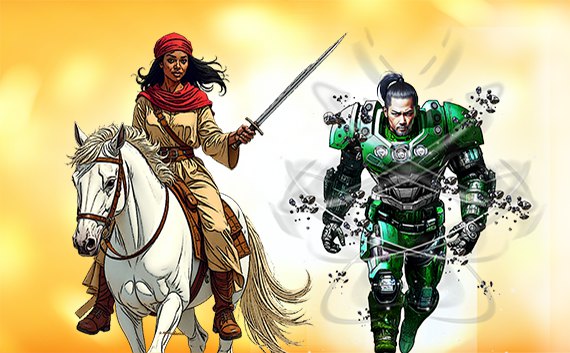
Like many artists, I grew up fascinated by superheroes.
Marvel and DC comics were a huge part of my childhood. Their larger-than-life characters, incredible powers, dramatic battles, and imaginative worlds captured my attention for years. Naturally, when I first began drawing comic book characters, superheroes became my favorite subjects. They taught me how to draw anatomy, action poses, movement, perspective, and visual storytelling.
At the time, I thought comic books and superheroes were almost inseparable.
But as I grew older, something began to change.
A Different Kind of Inspiration
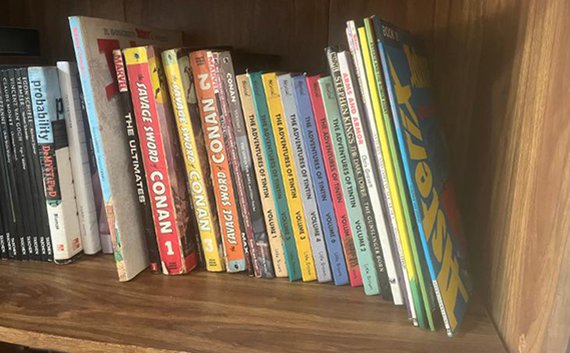
Although I enjoyed superhero comics, another series quietly influenced the way I viewed storytelling.
That series was Asterix.
Created by René Goscinny and illustrated by Albert Uderzo, Asterix was unlike anything else I had read. Instead of superheroes saving the world, it followed the adventures of a small village of Gauls resisting the mighty Roman Empire.
The stories were humorous, imaginative, and full of satire, yet they were also deeply rooted in history.
As a child, I learned through those books that the Romans never completely conquered the Gauls. Of course, Asterix added a delightful twist by giving the villagers a magical potion that made them temporarily unbeatable, blending history with fantasy in a way that made the stories unforgettable.
Believe it or not, I still own nearly the entire Asterix collection in my personal library.
Looking back, I realize those books planted a seed that would influence my own work years later.
Asking a Simple Question
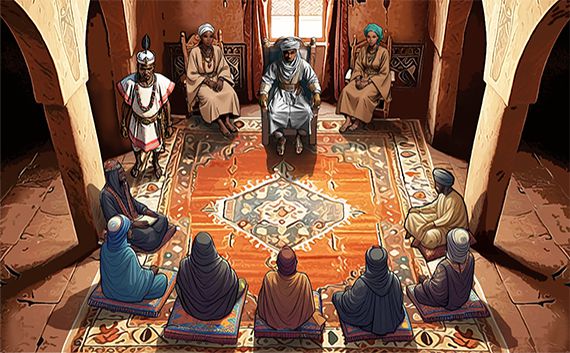
As my artistic skills improved, I found myself asking a question I had never considered before.
Why do comic books almost always have to be about superheroes or superhuman abilities?
There is certainly nothing wrong with superheroes. They have inspired generations of readers and artists, including me.
But history itself is filled with remarkable people whose achievements are every bit as extraordinary.
Brilliant military leaders.
Great kingdoms.
Fearless explorers.
Inventors.
Revolutionaries.
Visionaries.
Real people have lived lives that are just as inspiring as many fictional heroes.
I began to wonder why these stories were not being told more often through the comic book medium.
Flipping the Switch
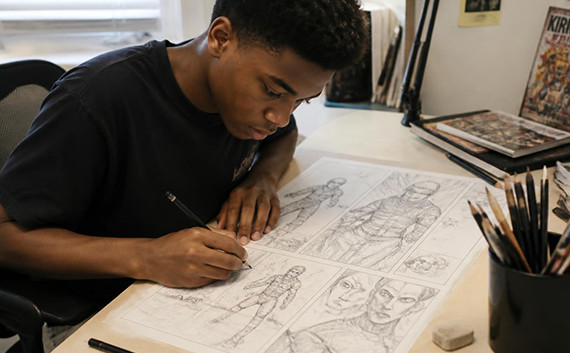
Eventually, I made a decision that completely changed my creative direction.
I decided to move away from creating traditional superhero stories and focus instead on historical and cultural storytelling.
It was not an easy transition.
After spending years drawing superheroes, changing direction felt unfamiliar. Superhero comics had become my comfort zone.
But sometimes growth begins the moment we step outside what feels comfortable.
I wanted to create graphic novels that entertained readers while also introducing them to real people, real civilizations, and real historical events.
Bringing History to Life
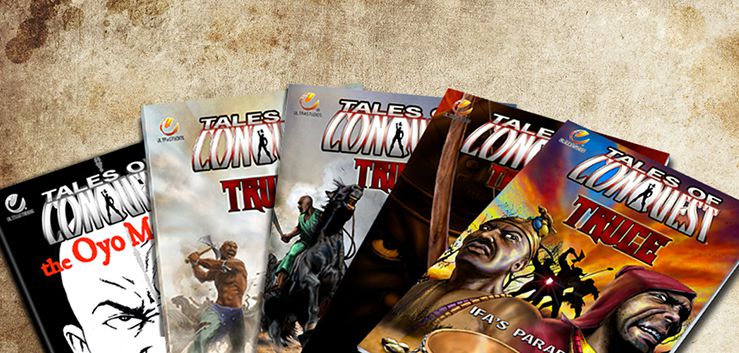
That decision led to several of my most meaningful projects.
One of the first was The Oyo Menace, a story inspired by the history of the Oyo Empire.
From there came Tales of Conquest, another adventure rooted in the same historical setting, allowing readers to experience the culture, politics, and conflicts of one of Africa’s great kingdoms through visual storytelling.
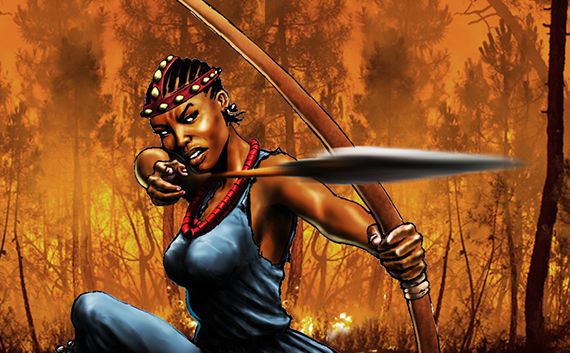
More recently, I illustrated The Queens of War, centered on the legendary Queen Amina of Zazzau, one of Africa’s most celebrated military leaders.
Unlike Asterix, my goal was not satire or caricature.
I wanted the artwork to feel realistic while remaining respectful of the history and cultures that inspired each story.
Every page became an opportunity to combine research, illustration, and storytelling into something that could both entertain and educate.
More Than Entertainment
One of the most rewarding moments as an artist came from seeing how readers responded to these books.
Many people told me they enjoyed learning history through comics.
Others appreciated seeing stories and cultures that are not often represented in mainstream comic books.
Those reactions confirmed something I had believed for a long time.
Comic books are far more versatile than many people realize.
They can preserve history.
They can celebrate culture.
They can inspire curiosity.
They can educate while entertaining.
They can introduce readers to remarkable people whose stories deserve to be remembered.
Looking Beyond One Genre
Today, I still admire superhero comics.
They remain an important part of comic book history and continue to inspire millions of readers around the world.
But I also believe the comic book medium is too powerful to be confined to a single genre.
Just as novels can tell mysteries, biographies, romances, historical fiction, adventures, or science fiction, comic books deserve the same creative freedom.
Every culture has stories worth preserving.
Every generation has heroes worth remembering.
And sometimes, the greatest heroes are not the ones with extraordinary powers.
They are the ones history has already given us.
That is the kind of storytelling I hope to continue creating for years to come.